
Multi-chain assets
Separate networks before managing assets
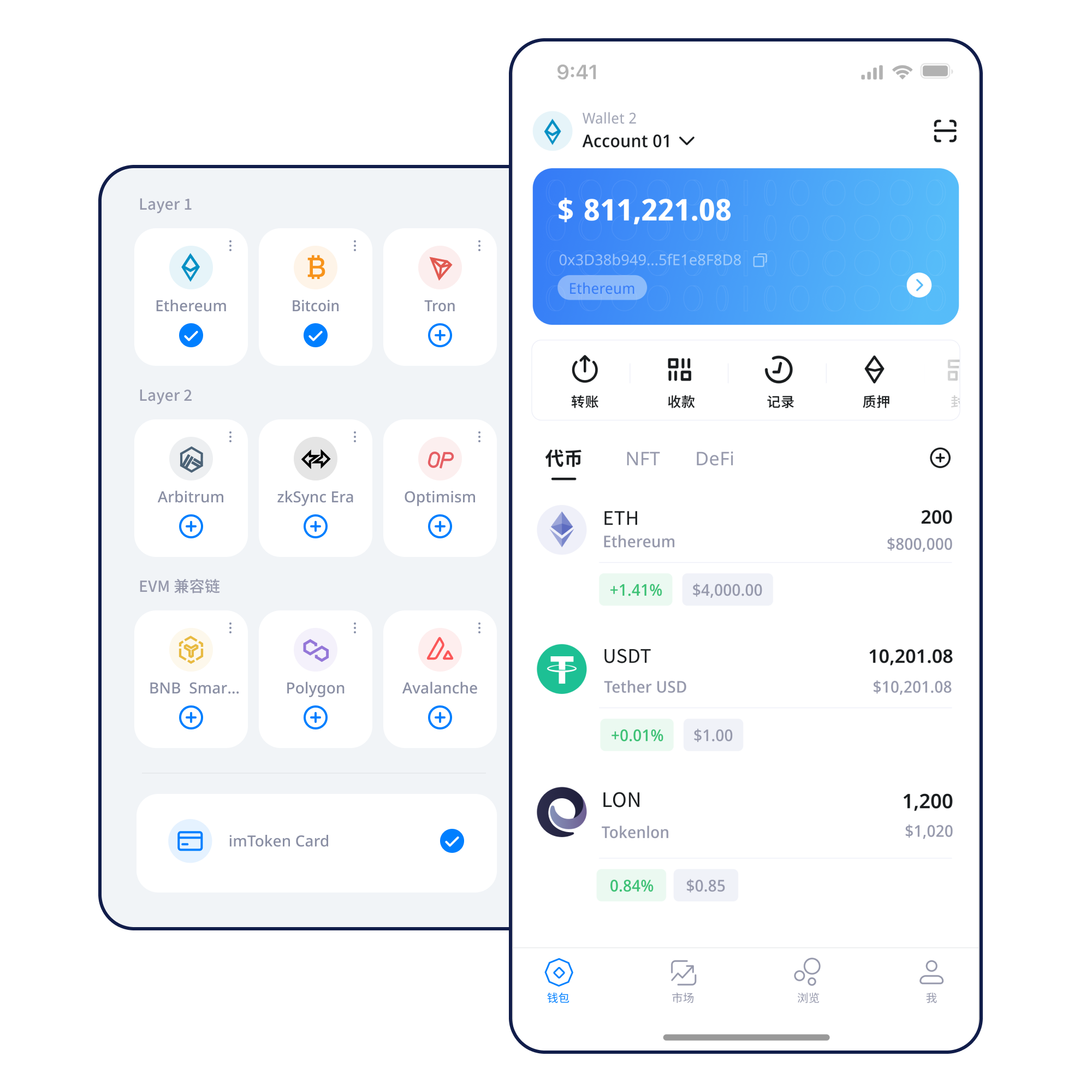
The same address format can appear across networks while balances, gas and transaction state remain separate. Check the network and destination before sending.
imtoken
A multi-chain wallet, blockchain network and Web3 knowledge hub from imtoken
From multi-chain assets and network selection to sending, receiving, DApp connections, approvals, network fundamentals and wallet security, imtoken organizes the decisions that matter into a clear learning and usage path.
Quick paths
Understand what to prepare when creating or importing a wallet and which recovery material must remain under your control.
Learn how to keep a seed phrase offline and avoid screenshots, cloud sync and chat-based storage.
Treat the destination address and network as one piece of information and confirm the sender uses the intended chain.
Review the address, network, amount, gas and transaction summary before submission.
Verify the domain and account request first, then review signatures and token approvals independently.
Wallet capabilities
The same address format can appear across networks while balances, gas and transaction state remain separate. Check the network and destination before sending.
View assets, manage networks and follow transaction records on mobile.
Review the destination, network, amount, gas and transaction hash.
View workflow →A browser connection does not imply consent to signatures or approvals; review each request independently.
Learn Web connections →
Keep seed phrases and private keys under your own control, prefer offline backups and review permissions you no longer need.
Multi-chain
Multi-chain management means keeping the address context, balance, gas asset and transaction state of each network distinct.
Learn more →Public Chains
Public chains use protocol rules and distributed participants to maintain shared state, while explorers help verify transactions.
Learn more →
EVM
EVM networks can share address formats and contract interfaces while chain IDs, gas assets and state remain separate.
Learn more →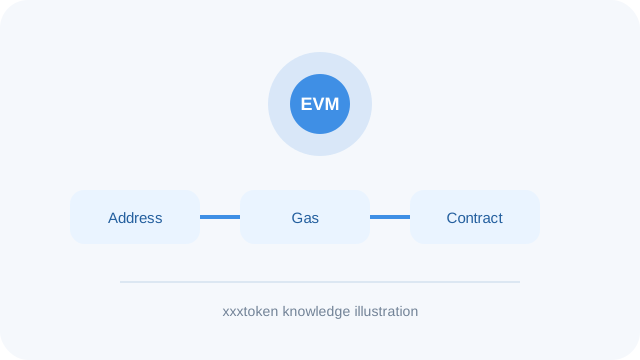
Layer 2
Layer 2 systems connect to a main chain through defined security or settlement models, and cross-layer transfers can involve several stages.
Learn more →
Gas & Confirmations
Gas pays for network execution resources; success still depends on parameters, contract execution and network state.
Learn more →Wallet journey
Use the site-wide download entry and make sure your device and operating environment are trusted before continuing.
Make sure recovery information is handled only in a trusted local environment.
Store the seed phrase offline, avoid screenshots and cloud sync, and never disclose a private key.
Confirm the asset’s network, the destination’s supported chain and the asset required to pay gas.
Check the address, network and amount; consider a small test when using a new network or destination.
Use the transaction hash to verify the on-chain result and periodically review DApp approvals you no longer need.
Web3 & DApp
Connecting a wallet does not mean every signature should be approved. Review each signature and approval on its own.
Open Web3 guide →Security
Security starts with key custody but does not end after backup. Review the address, network and amount before transfers; verify the domain before DApp connections; inspect the target and scope of every signature or approval. Public devices, public networks, remote-control tools and clipboard substitution can all increase risk. Because on-chain transactions usually cannot be reversed by a wallet alone, pre-submission review should be a standard habit.
Open Security Center →Academy | Featured
Addresses identify destinations; seed phrases and private keys control wallets; networks determine where transactions execute; gas prices execution; transaction hashes identify results; DApps and approvals introduce smart-contract permissions. Understanding the links between them makes every later action easier to evaluate.
Read Getting Started →Understand nodes, blocks and confirmation state.
ContractsEVM & Smart ContractsLearn addresses, gas, tokens and approvals.
ScalingLayer 2 BasicsUnderstand mainnet relationships, bridges and arrival status.
Web3DApp ApprovalsReview approval targets and scope.
SecurityWallet SecurityConnect key, device and transaction checks into one habit.
GlossaryBlockchain GlossaryUnderstand terms in real operational context.
Ethereum
Ethereum PoS uses validators to participate in consensus. Reward sources, network conditions, exit mechanics and waiting times can change, and historical performance is not a guaranteed return.
Learn staking mechanics →Updates
FAQ
Digital asset records live on the relevant blockchain. A wallet manages keys and helps read balances, construct transactions and sign requests.
No. Seed phrases and private keys remain under the user’s control and are never appropriate troubleshooting material.
Both are highly sensitive control credentials. Derivation details vary by wallet design, but neither should be uploaded, screenshotted or sent to another person.
EVM networks may use the same account format, while chain IDs, gas assets and blockchain state remain separate.
Once confirmed on-chain, a transfer usually cannot be reversed by the wallet alone. Check the address, network and amount before submission.
Gas is generally a blockchain network fee for transaction execution and is not the same as a wallet service fee.
A transaction hash identifies an on-chain transaction and can be used in a block explorer to inspect status, block inclusion and confirmations.
No. Connection, signatures and token approvals are separate actions, and the latter two should be reviewed independently.
imtoken
Use the site’s unified download entry. Before any transfer, signature or approval, review the address, network and request details again.